What duties and taxes will I pay?
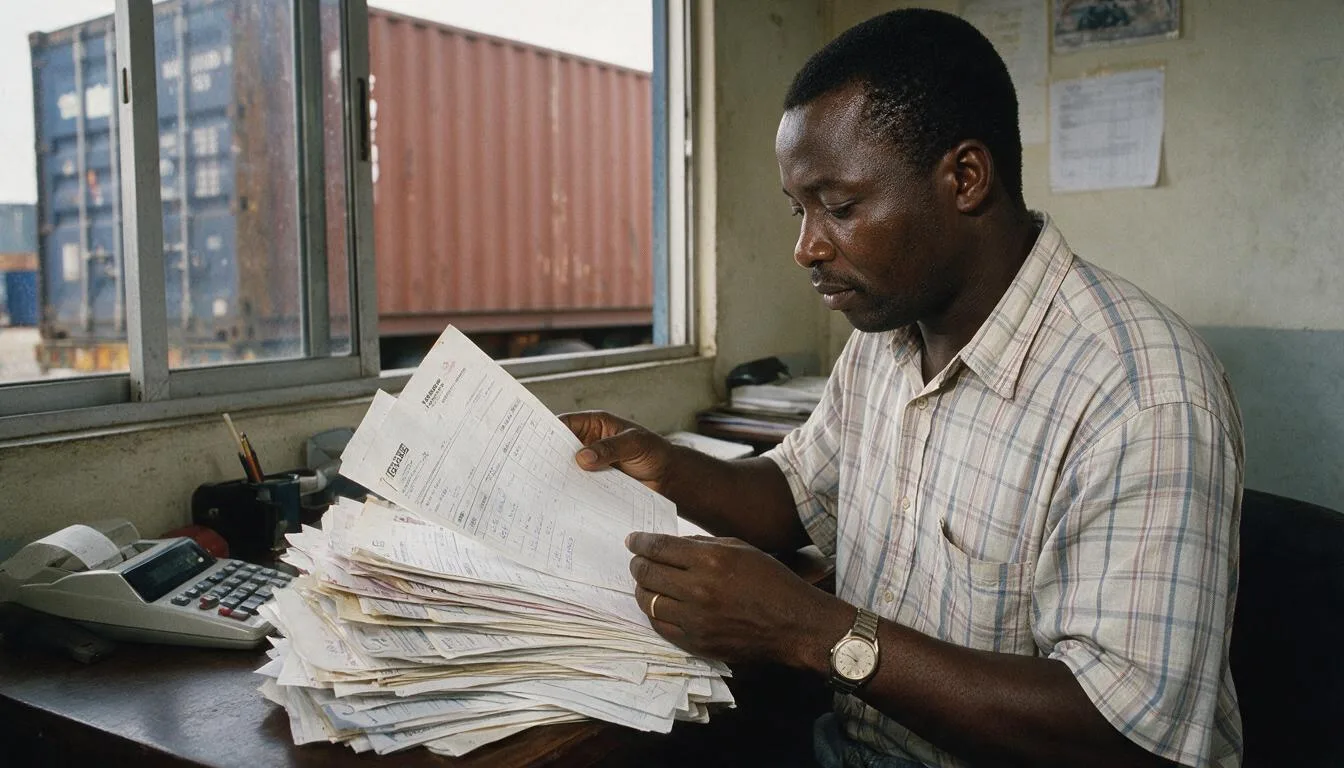
You pay all duties, VAT, and clearance charges in your own country — Apex Home Export sells FOB Guangzhou, so nothing is collected on our side. Your customs broker calculates the amount based on the HS code, CIF value, and your national tariff schedule at Lagos, Tema, Mombasa, Umm Qasr, or Manila. We give you the commercial invoice, packing list, and Bill of Lading so your broker can file correctly.
Why this concern is realWhy this concern is real
Most disputes at destination happen because the buyer never checked the landed cost before the container sailed. A twin tub bought at $30-45 FOB looks cheap until duty, VAT, port levies, and terminal handling add 25-45% on top in some markets. Importers who skip this step get a demurrage bill piling up at $50-150 per day while they scramble to find cash for clearance. Others get hit with a different HS code classification than they expected, because the broker on the ground — not the seller in Guangzhou — decides how the goods are declared.
How it actually works
Duty is calculated on CIF value (Cost + Insurance + Freight), not just the FOB price you paid us. So your freight cost matters directly: a 40'HQ to Lagos runs $3,000-4,000, to Tema $2,800-3,500, to Mombasa $2,500-3,500, to Umm Qasr $2,500-4,500, and to Manila $1,000-1,800. Add that freight figure to your FOB invoice total, and that's roughly the base your customs authority uses. On top of duty, expect VAT (rated separately by country), a possible levy for used goods versus new, port/terminal handling fees, and your clearing agent's commission. Documents required almost everywhere: commercial invoice, packing list, Bill of Lading, and in some ports a Certificate of Origin. Iraq's Umm Qasr route often runs through a UAE payment corridor, which can add its own documentation step. None of this is collected by Apex — it happens entirely at your port, under your country's customs code, after the container arrives.
How we handle it at Apex Home Export
We don't clear customs for you and we don't quote landed cost, because duty schedules change and vary by product code and by country — only your local broker has current rates. What we do control: accurate paperwork. Every invoice states real FOB value, real product description, and real HS-relevant details (grade A/B/C for used units, model, quantity). We log every used unit by serial number after its 27-point bench test, so if your customs officer wants to verify grade or specification against the invoice, the numbers match. We also send the loading and run-test video before you release the 70% balance, so you know exactly what's on the vessel and can pass that information to your broker in advance, before the container reaches Lagos, Tema, Mombasa, Umm Qasr, or Manila. If you want a written inspection report for your customs file, SGS, Bureau Veritas, or Intertek can inspect at your cost before shipment.
What you should do before you pay
- Get your HS code and duty rate confirmed by a licensed customs broker in your city before signing the PI, not after the container sails.
- Ask your broker whether used-appliance import is restricted or requires extra permits in your country — this varies by product category.
- Calculate landed cost yourself: FOB price + freight band for your port + estimated duty/VAT + broker fee, before committing the 30% deposit.
- Confirm whether your port requires a Certificate of Origin or pre-shipment inspection certificate, and request it from us in writing if so.
- Set aside cash for clearance separately from your purchase budget — demurrage adds up fast if duty isn't paid on arrival.
Bottom line: we control what leaves Guangzhou and the paperwork that proves it, but duty and tax at your port is your broker's job to calculate before you commit money. Message us on WhatsApp with your product list and we'll send invoice details your local broker can quote against.