Why We Publish Our Grading Standard (and Most Exporters Do Not)
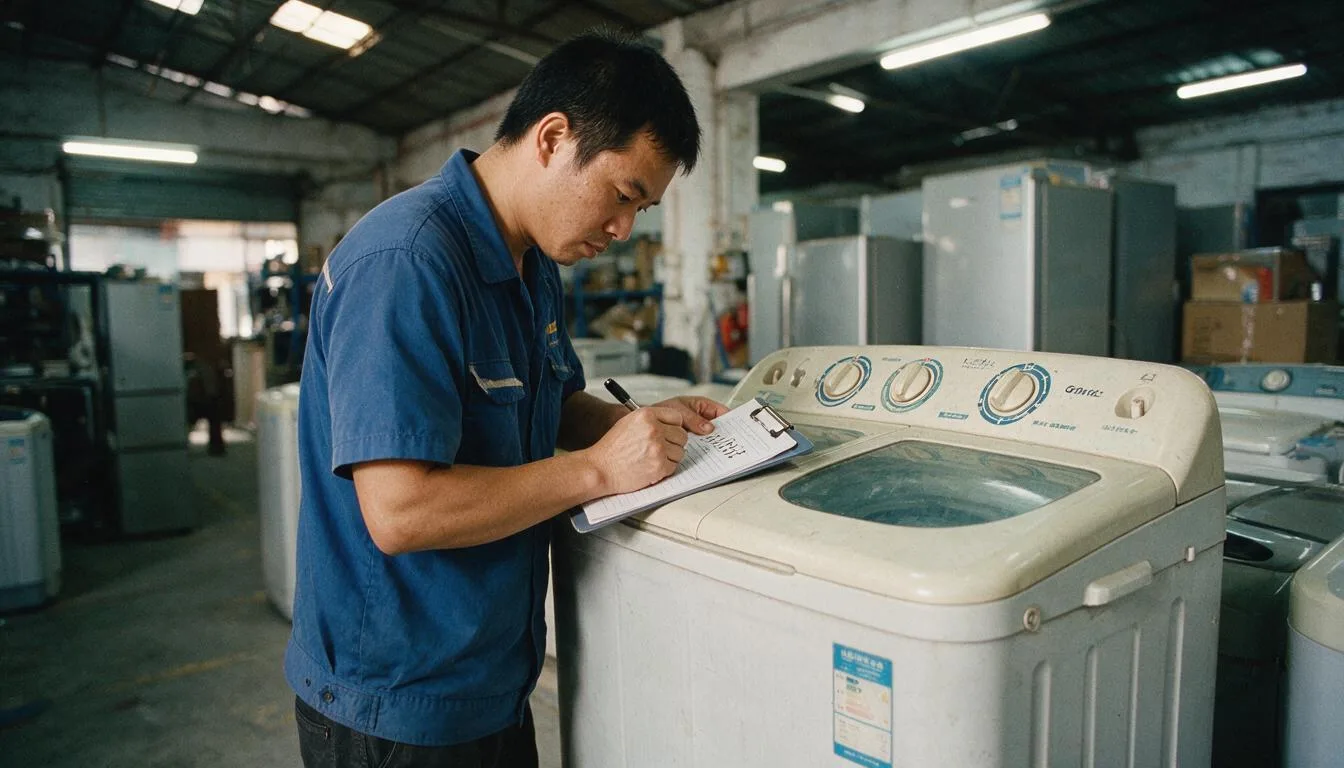
Grade A means nothing if nobody writes down what it means. At Apex Home Export we publish our A/B/C definitions in writing, with exact ages and warranty terms, because a buyer in Lagos, Tema, or Mombasa should not have to guess what he is paying for before the container leaves Guangzhou.
Why this concern is real
In the graded used trade, almost every exporter stamps units "Grade A" to move stock faster. No age cutoff, no warranty period, no photo reference, no serial record. A buyer pays a 30% deposit expecting recent units and receives 8-year-old stock instead, with a verbal warranty that disappears the moment the container clears Lagos or Umm Qasr port. By then the bench test happens at destination, disputes drag on for weeks, and there is nothing in the contract to point to because the grade was never defined on paper in the first place.
How it actually works
Honest grading requires three things most exporters skip: a written test protocol, a serial-number log per unit, and photo evidence per grade level, all shared before the deposit is paid. It also means welcoming outside verification — SGS, Bureau Veritas, or Intertek — at the buyer's cost, because a standard that cannot survive a third-party check is not a standard, it is a sales pitch. None of this is expensive to publish. It costs the exporter time to log 27 points per unit and photograph rubrics. That is the entire reason most skip it — not because it is hard, but because it is easier to sell vague.
How we handle it at Apex Home Export
We pre-scanned 184 factories across 8 appliance categories and hold a verified A-list supplier per category for new white-label stock. On used units, every single piece runs a 27-point bench test and gets its serial number logged before it is offered to you. Grades are fixed in writing: Grade A is 3 years old or less with a 90-day warranty, Grade B is 5 years old or less with a 30-day warranty, Grade C is tested working, sold as-is with no warranty. A twin-tub 8-10kg Grade B unit runs $48-68 FOB against $30-45 for new. You get the photo rubric and per-serial log before you commit funds, and SGS, Bureau Veritas, or Intertek can verify any container at your cost. We never trade used refrigerators, freezers, air conditioners, or TVs, and nothing counterfeit moves through Apex under any grade. Payment is 30% T/T deposit, 70% against the Bill of Lading copy, released only after you receive the loading and run-test video — video before balance, every container. Funds go only to our corporate trade account matching the contract entity name, confirmed on your signed PI plus a recorded video. This is slower and more paperwork per container than quoting a flat "Grade A" price. It is also why buyers in Lagos, Mombasa, and Manila come back for their fourth and fifth container instead of their first refund request. The repeat machine beats one-off margin, every time.
What you should do before you pay
- Ask for the written grade definitions with ages and warranty terms before sending any deposit.
- Request the photo rubric and per-serial test log for your specific container, not a generic sample.
- Confirm the 27-point bench test result is recorded per unit, not just a bulk pass/fail.
- Book a third-party inspection (SGS, Bureau Veritas, Intertek) at your cost if the order value justifies it.
- Verify the bank account name matches the contract entity exactly, confirmed on your signed PI.
- Insist on the loading and run-test video before releasing the 70% balance.
A grading standard you cannot read in writing is not a grading standard. Message us on WhatsApp to see the actual A/B/C rubric and serial logs before you commit a single dollar: https://wa.me/8619905922526.